Coffee's Brain Boosting Effect Goes Beyond Caffeine

They need a control group with no sense of smell.

I don't drink coffee, but I'll bet the primary motivator for people to "wake up" or prepare themselves in some way to get up and get their faculties together for the coming day is that smell from the coffee maker. They alluded to this in the study, which was a good sign, but not having a decaffeinated control seems like a strange oversight.

I know people who's morning bowl movements are almost entirely dependent on either the smell, or taste of coffee. It's a powerful trigger. :cautious::poop:
You don't drink coffee? I'm trying to quit as well
 
You don't drink coffee? I'm trying to quit as well
Not for the usual reasons. I'm a supertaster. So, certain things are really bitter, or just too much. Coffee is one of those things. I don't hate it, but it's like drinking the liquified tar scrapings of a bong that has been used for 20 years. It's an acquired taste in my case. I have to be in the mood to carpet bomb my taste buds with bitterness and traumatize them for a while.

Other things that I find annoyingly overpowering are (too much) hops in beer, and certain green veggies that other people find odd, but maybe a bit bitter. Kale and brussel sprouts are among them. In my case, it's like sucking on corroded pennies.

I paint an unpleasant picture probably, but it's just a few things, other stuff is so good, man.....I wish most of it wasn't found in a pastry or candy shop. Fruit is crazy.
Do you use any stimulants at all like caffeine pills or ephedrine?
 
Do you use any stimulants at all like caffeine pills or ephedrine?
Sure, I use both at the moment as I'm on a cutting phase as I've got some fat to lose, so before my cardio, it's caffeine, ephedrine and 1ml of L-Carnitine. Otherwise, I drink green tea, black tea or whatever tea and if I'm really dragging my ass pre-workout, I will drop in 200 mgs of caffeine.

For non-workout, regular life though, I just drink tea. I tend to develop a tolerance for caffeine after about 3 weeks so I keep that for when I don't feel like getting my shit together and need a kick.
 
Of interest?
Can't remember where but sometime recently I heard, saw or read about how caffeine itself works and it made enough sense that I believe it to be true, for now at least.

Apparently it not so much that it's a stimulant but rather it blocks some receptors or pathways or something that allow us to feel tired. Same end result, the perception is that tiredness to wakefulness ratio has changed favorably. That's my shitty summation of what I took in anyways.

I tried to find it again a while ago because on some levels it doesn't make sense to me. For example by what mechanism does it accelerate HR or fatloss/metabolic rate ? I gave up looking cause it's not a major concern to me as long as I get the effect. Found it interesting and may revisit one day but I suspect it's a deep rabbit hole.
 
Well shit I couldn't resist after posting, it was actually pretty easy to find a sufficient article. Not what I saw before but it works. Anyhoo this was all news to me...

 
Of interest?
Can't remember where but sometime recently I heard, saw or read about how caffeine itself works and it made enough sense that I believe it to be true, for now at least.

Apparently it not so much that it's a stimulant but rather it blocks some receptors or pathways or something that allow us to feel tired. Same end result, the perception is that tiredness to wakefulness ratio has changed favorably. That's my shitty summation of what I took in anyways.

I tried to find it again a while ago because on some levels it doesn't make sense to me. For example by what mechanism does it accelerate HR or fatloss/metabolic rate ? I gave up looking cause it's not a major concern to me as long as I get the effect. Found it interesting and may revisit one day but I suspect it's a deep rabbit hole.
The adenosine blocking effects of caffeine as it's "only" wakefulness effect never rang true to me either, as there is a clear stimulatory and thermogenic effect.


A limitation of the way modern medicine tends to approach single molecules is 1 molecule 1 function, where in reality that is almost never the case (but is usually the best business model.)

This 1968 paper I think describes the underlying mechanism of action in a more comprehensive way that explains the observed effects.

https://sci-hub.se/10.1085/jgp.52.5.760

This paragraph, sums up

"Evidence is presented that caffeine does not act on the mitochondrial Ca uptake system and that its effect cannot be attributed to the accumulation of adenosine 3', 5r-phosphate. Two distinct caffeine effects are described. At high ATP concentrations caffeine decreases the coupling between ATP hydrolysis and Ca inflow. It either inhibits inflow without any inhibition of the rate of ATP hydrolysis, or it stimulates the ATPase activity without stimulating Ca inflow. These high ATP concentrations (much higher than needed for the saturation of the transport ATPase) greatly reduce the control of the turnover rate of the transport system by accumulated Ca. At low ATP concentrations when the transport system is under maximal control by accumulated Ca, caffeine inhibits the ATPase activity without affecting the rate of Ca inflow."

Caffeine modulating ATP / ATPase effects on calcium channels makes a lot more sense to me.

This newer (2013) paper describes the same effect, but from a "higher" level as it discusses caffeine's effect on glucose homeostasis.

I believe @Sorbate has or had experienced this effect.
Hypoglycemia makes zero sense from an adenosine blocking only point of view.

 
Last edited:
The adenosine blocking effects of caffeine as it's "only" wakefulness effect never rang true to me either, as there is a clear stimulatory and thermogenic effect.


A limitation of the way modern medicine tends to approach single molecules is 1 molecule 1 function, where in reality that is almost never the case (but is usually the best business model.)

This 1968 paper I think describes the underlying mechanism of action in a more comprehensive way that explains the observed effects.

https://sci-hub.se/10.1085/jgp.52.5.760

This paragraph, sums up

"Evidence is presented that caffeine does not act on the mitochondrial Ca uptake system and that its effect cannot be attributed to the accumulation of adenosine 3', 5r-phosphate. Two distinct caffeine effects are described. At high ATP concentrations caffeine decreases the coupling between ATP hydrolysis and Ca inflow. It either inhibits inflow without any inhibition of the rate of ATP hydrolysis, or it stimulates the ATPase activity without stimulating Ca inflow. These high ATP concentrations (much higher than needed for the saturation of the transport ATPase) greatly reduce the control of the turnover rate of the transport system by accumulated Ca. At low ATP concentrations when the transport system is under maximal control by accumulated Ca, caffeine inhibits the ATPase activity without affecting the rate of Ca inflow."

Caffeine modulating ATP / ATPase effects on calcium channels makes a lot more sense to me.

This newer (2013) paper describes the same effect, but from a "higher" level as it discusses caffeine's effect on glucose homeostasis.

I believe @Sorbate has or had experienced this effect.
Hypoglycemia makes zero sense from an adenosine blocking only point of view.
I got as much out of the above as I did in my first go-around with pharmacology.
 
The adenosine blocking effects of caffeine as it's "only" wakefulness effect never rang true to me either, as there is a clear stimulatory and thermogenic effect.


A limitation of the way modern medicine tends to approach single molecules is 1 molecule 1 function, where in reality that is almost never the case (but is usually the best business model.)

This 1968 paper I think describes the underlying mechanism of action in a more comprehensive way that explains the observed effects.

https://sci-hub.se/10.1085/jgp.52.5.760

This paragraph, sums up

"Evidence is presented that caffeine does not act on the mitochondrial Ca uptake system and that its effect cannot be attributed to the accumulation of adenosine 3', 5r-phosphate. Two distinct caffeine effects are described. At high ATP concentrations caffeine decreases the coupling between ATP hydrolysis and Ca inflow. It either inhibits inflow without any inhibition of the rate of ATP hydrolysis, or it stimulates the ATPase activity without stimulating Ca inflow. These high ATP concentrations (much higher than needed for the saturation of the transport ATPase) greatly reduce the control of the turnover rate of the transport system by accumulated Ca. At low ATP concentrations when the transport system is under maximal control by accumulated Ca, caffeine inhibits the ATPase activity without affecting the rate of Ca inflow."

Caffeine modulating ATP / ATPase effects on calcium channels makes a lot more sense to me.

This newer (2013) paper describes the same effect, but from a "higher" level as it discusses caffeine's effect on glucose homeostasis.

I believe @Sorbate has or had experienced this effect.
Hypoglycemia makes zero sense from an adenosine blocking only point of view.
Yep I can get caffeine induced hypoglycemia. But if I eat a high protein or protein and fat meal before drinking coffee, it doesn't happen.

For example:

If I eat 4 eggs I can drink a full cup of coffee with zero issues

If I drink a protein shake with milk and drink coffee 50% of the time I can go hypo

If I eat nothing, 80% of the time I can get hypo.

Now I am completely aware if its going to happen, and if I eat something that asorbs quickly (bread, crackers, potato chips, lol) it will go away and stay away. If I try and use sugar (like a can of pop), I will bounce from hypo to not hypo most of the day, chasing it with sugar to try to keep it from coming on and I feel like crap all day.

But since I have started to eat 4 or 5 eggs every morning, I have had zero issues.

A funny thing to note, this doesn't happen with tea, only coffee.
 
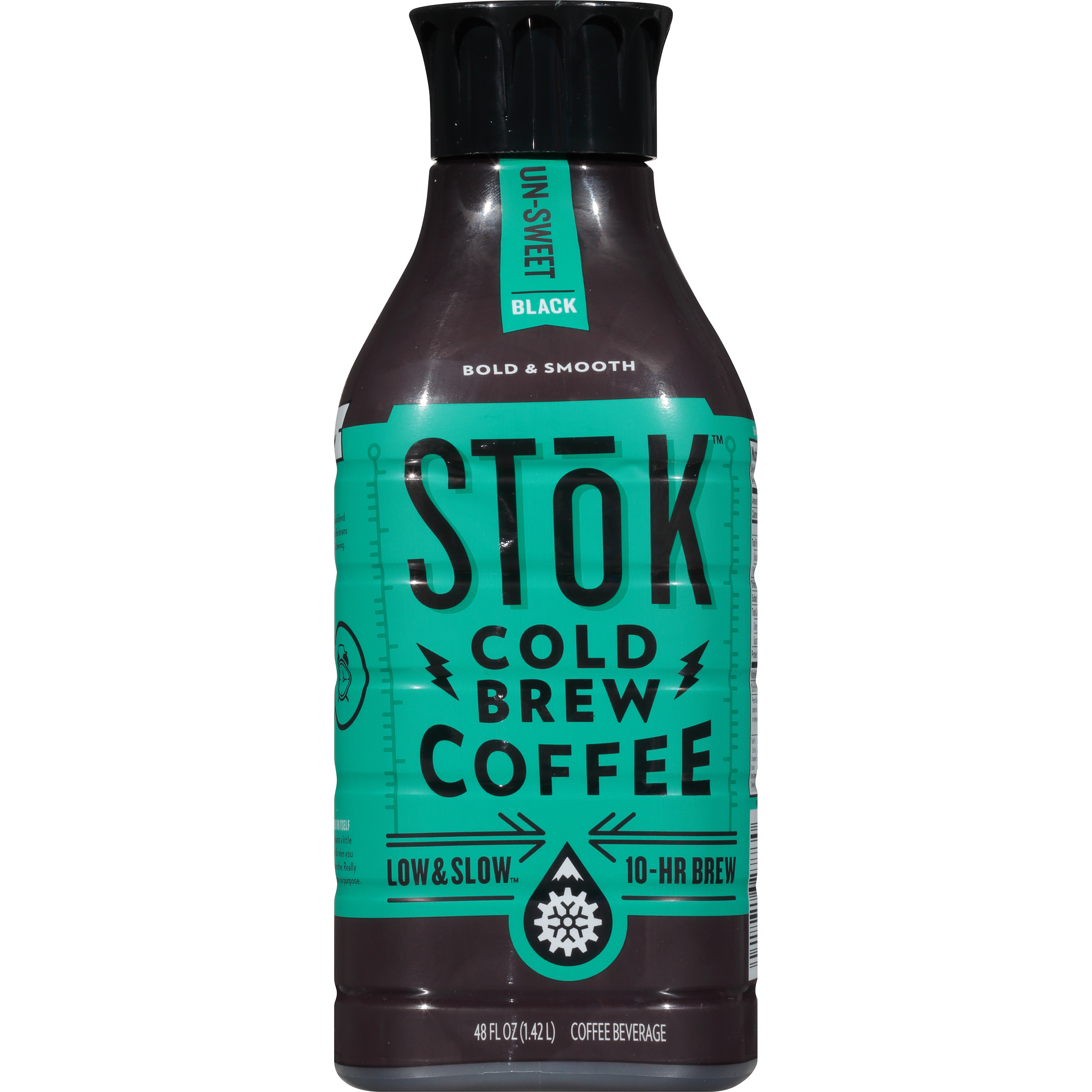
I dont drink much coffee, I prefer yerba mate tea as I've got a family member that brings bricks of it from Portugal for me, but that said recently a friend turned us on to Stok cold brew premade coffee cuz you can get it at Costco. It's really good and you can drink it right out of the jug, no sweetener or milk needed. It's a great early AM pre workout kicker. If you like cold coffee try this:

3800.jpg
 
Betting that would that be the whey based protein drinks doing it.
Whey isolate. You can tell it hits fast and ascorbs quick. Well because about 20 minutes fter drinking it, I start to get really hot almost breaking a sweat. Its good protein form Canadian Protein. I believe that is why I can still go hypo, it hits and leaves faster than the stimulation effects from caffine. Likely why the delay in going hypo as well.
 
Top