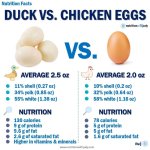
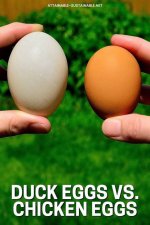
Duck eggs are larger, richer, and pack more protein, fat, and calories than chicken eggs.
Size and Appearance
• Size: A duck egg is 50% to 100% larger than a standard chicken egg. One duck egg often equals roughly 1.5 to 2 chicken eggs.
• Shells: Duck eggshells are significantly thicker, sturdier, and less porous, which helps them stay fresh longer. They are usually white, cream, or pale gray/blue/green.
• Yolks and Whites: Duck yolks are much larger, deeper golden-orange, and richer. The egg white is denser and clearer, lacking the yellowish tint of chicken whites.
Taste and Culinary Use
• Flavor: Duck eggs have a more intense, creamier, and sometimes slightly gamier flavor than chicken eggs.
• Baking: Bakers love duck eggs because their higher protein and lower water content make baked goods, cakes, and meringues fluffier and moister.
• Cooking: You can scramble, fry, or boil them just like chicken eggs, though overcooking duck egg whites can make them rubbery. You can typically substitute them in a 1:1 ratio, keeping the larger volume in mind.
Nutritional Comparison (Approximate)
FeatureDuck EggChicken Egg
Protein~7–9 g~6 g
Calories~130–185 kcal~70–90 kcal
FatHigher (~13% per 100g)Lower (~9.5% per 100g)
Vitamin B12Significantly higher (up to 168%+ DV)Lower
IronNearly triple the amountLower