
Home Hematocrit / Hemoglobin meter review and information

Slartibartfast

Swollen Member
Trusted Member
Worried about sludge in your veins and dying in your sleep? This may not solve your problems, but it may help manage some anxiety.

I bought this machine for home testing of the above. Hematocrit is one of those things I need to keep track of because I like Equipoise and I also like Anadrol, with Equipoise of course. The reviews of home testers are all over the map and I think the primary reason for that is people simply don't know how to use them, or can't read instructions. Surprise, surprise.
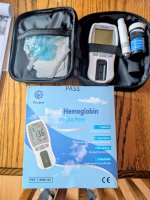
HCT kit.jpg
Rather than relying on any Amazon reviews, since I don't trust those anymore, I read up on the technology itself, specifically the tech in this meter which is reflectance photometry, also commonly used in blood Glucose monitors. These seem to be of the same tech that Canadian Blood Services use in testing your values at the time of a donation. I'll get into some points on taking samples in a moment, which seem to be key on getting accurate readings.

After a few weeks of use and 12 tests so far, I am satisfied that this meter is accurate enough to justify my buying it at roughly $125, this one being slighly more expensive because of the extra testing strips. Those of you who use blood glucose testing meters know that the cost, mostly, is the testing strips. For those old enough to remember buying printer ink, similar deal.

On Sept 10 I received a blood test HCT(Hematocrit) of 56% and HG(Hemoglobin) at 187. This was after being on 175 test with some Mast at ~300 for about 6 weeks where I previously was on 500/500 Test and Eq. The HG/HCT should be coming down. I dropped everything but test at that moment, and stayed at 100mgs since then.

Over the course of these last 6 weeks I've watched the HG/HCT drop from my first home test at 178/52% on Sept 28th to 172/50% on Oct 21 to 164/48% 48 hours after a donation. I take two tests each time and accept the highest reading as my data. On the day of donation the nurse tested me at 177 where my home reading an hour before was 175, which is easily within a reasonable deviation. Most of this photometer testing seems to have a deviation of anywhere from 4-8 g/DL, but the most variance I found between two immediate tests was 5, so 170/175 for example.

Some key points here in testing procedures: I was grilling the Blood Services nurse about all these things and she was super helpful.

1. Prick your finger and wipe off the first 2 or 3 drops of blood. Sample the fourth if you can. The reason for this is when you are injured, there's tissue material, plasma and platelets floating around in those first spurts of blood and those clotting platelets will dilute the red blood cell concentration and give you a falsely LOW reading. For this reason, I take two samples and log the highest one. When I saw some reviews claiming the readings were "all over the place" I suspect this was the issue. My back to back readings did not vary that much at all.

2. Calculated HCT from HG: This meter calculates your HCT from your HG. This is not ideal under some circumstances, because it can fail to include medications and treatments that affect blood thickness and whatnot. If you're not on any special meds for this sort of thing, then a calculated HCT is not really a big deal. If you're on a bunch of meds that interfere with this, then you want the lab centrefuge type measurement. I don't require this, so I'm not worried about it.

3. Yes, hydration is a factor. Keep in mind always that you are better off in the afternoon after you're sure you're hydrated to take your tests. There's a limit to how much this can affect the tests, but you don't need any falsely high readings to further confuse your data.

So, do I really need one of these things? Probably not. If you're prone to higher HCT and you like things like Eq, really you should be making donations when you can, and getting a high reading on your handy meter isn't going to get you to your blood donation any faster if you are limited in how often you can donate. So you still have to ride it out. However, if like me you lie awake at night and wonder about your heart pumping 60 weight motor oil because you just watched a video on IMMINENT DEATH AND HEMATOCRIT then it might settle your mind a bit. Especially if you've been skating along for months without checking stuff like this, it's nice to know where you stand.

I think most people will be just fine having regular blood tests, but if this is a concern...then it's damn handy to be able to check.

Have a look at what's available, and check out the technology used in the meters, or even ask your Dr or the nurse who takes your blood. Many will have no ideas but some are up on their blood issues, especially because lots of people donate exactly for high hemo due to reasons other than steroid use. All I tell the nurse is "I'm supposed to watch my iron as my HCT can get a bit high, any advice on testing at home?" . Anything we can do to broaden our knowledge on these things is a bonus.

Hope that's helpful,
Cheers.
 
Last edited:
Sweet im getting one.
Yeah, have a good look around. I was kind of impatient so I went with Amazon. This one comes with a couple of special calibration strips and each packet of the regular testing strips comes with a little chip, like a SIM card almost that you insert with each new batch of test strips, so it's some sort of further calibration I assume. Whichever one you choose, look to see if it has stuff like that. Some of them are no doubt bare bones type cheapies.
 
Worried about sludge in your veins and dying in your sleep? This may not solve your problems, but it may help manage some anxiety.

I bought this machine for home testing of the above. Hematocrit is one of those things I need to keep track of because I like Equipoise and I also like Anadrol, with Equipoise of course. The reviews of home testers are all over the map and I think the primary reason for that is people simply don't know how to use them, or can't read instructions. Surprise, surprise.

View attachment 104139
Rather than relying on any Amazon reviews, since I don't trust those anymore, I read up on the technology itself, specifically the tech in this meter which is reflectance photometry, also commonly used in blood Glucose monitors. These seem to be of the same tech that Canadian Blood Services use in testing your values at the time of a donation. I'll get into some points on taking samples in a moment, which seem to be key on getting accurate readings.

After a few weeks of use and 12 tests so far, I am satisfied that this meter is accurate enough to justify my buying it at roughly $125, this one being slighly more expensive because of the extra testing strips. Those of you who use blood glucose testing meters know that the cost, mostly, is the testing strips. For those old enough to remember buying printer ink, similar deal.

On Sept 10 I received a blood test HCT(Hematocrit) of 56% and HG(Hemoglobin) at 187. This was after being on 175 test with some Mast at ~300 for about 6 weeks where I previously was on 500/500 Test and Eq. The HG/HCT should be coming down. I dropped everything but test at that moment, and stayed at 100mgs since then.

Over the course of these last 6 weeks I've watched the HG/HCT drop from my first home test at 178/52% on Sept 28th to 172/50% on Oct 21 to 164/48% 48 hours after a donation. I take two tests each time and accept the highest reading as my data. On the day of donation the nurse tested me at 177 where my home reading an hour before was 175, which is easily within a reasonable deviation. Most of this photometer testing seems to have a deviation of anywhere from 4-8 g/DL, but the most variance I found between two immediate tests was 5, so 170/175 for example.

Some key points here in testing procedures: I was grilling the Blood Services nurse about all these things and she was super helpful.

1. Prick your finger and wipe off the first 2 or 3 drops of blood. Sample the fourth if you can. The reason for this is when you are injured, there's tissue material, plasma and platelets floating around in those first spurts of blood and those clotting platelets will dilute the red blood cell concentration and give you a falsely LOW reading. For this reason, I take two samples and log the highest one. When I saw some reviews claiming the readings were "all over the place" I suspect this was the issue. My back to back readings did not vary that much at all.

2. Calculated HCT from HG: This meter calculates your HCT from your HG. This is not ideal under some circumstances, because it can fail to include medications and treatments that affect blood thickness and whatnot. If you're not on any special meds for this sort of thing, then a calculated HCT is not really a big deal. If you're on a bunch of meds that interfere with this, then you want the lab centrefuge type measurement. I don't require this, so I'm not worried about it.

3. Yes, hydration is a factor. Keep in mind always that you are better off in the afternoon after you're sure you're hydrated to take your tests. There's a limit to how much this can affect the tests, but you don't need any falsely high readings to further confuse your data.

So, do I really need one of these things? Probably not. If you're prone to higher HCT and you like things like Eq, really you should be making donations when you can, and getting a high reading on your handy meter isn't going to get you to your blood donation any faster if you are limited in how often you can donate. So you still have to ride it out. However, if like me you lie awake at night and wonder about your heart pumping 60 weight motor oil because you just watched a video on IMMINENT DEATH AND HEMATOCRIT then it might settle your mind a bit. Especially if you've been skating along for months without checking stuff like this, it's nice to know where you stand.

I think most people will be just fine having regular blood tests, but if this is a concern...then it's damn handy to be able to check.

Have a look at what's available, and check out the technology used in the meters, or even ask your Dr or the nurse who takes your blood. Many will have no ideas but some are up on their blood issues, especially because lots of people donate exactly for high hemo due to reasons other than steroid use. All I tell the nurse is "I'm supposed to watch my iron as my HCT can get a bit high, any advice on testing at home?" . Anything we can do to broaden our knowledge on these things is a bonus.

Hope that's helpful,
Cheers.
i read your hematocrit is 3 x your hemoglobin after diving by 10. so if your 180 hemoglobin using canadian lab values thats 18 x3 so hct should be around 54. this method also tells you if your over or under hydrated.
 
i read your hematocrit is 3 x your hemoglobin after diving by 10. so if your 180 hemoglobin using canadian lab values thats 18 x3 so hct should be around 54. this method also tells you if your over or under hydrated.
How do you tell if your over or under hydrated?
 
How do you tell if your over or under hydrated?
Let's say your hemoglobin is 180; the corresponding average HCT would be 54. However, if it's 56, etc., this means it's thicker, so not hydrated.

On the other hand, if your hemoglobin is 180 but your HCT is 51, that indicates you're overhydrated.
Now, there are some exceptions if people are on some medications or have health issues, but this is how it was explained to me by my endo.

Most users go first thing in the AM to get blood drawn as there might be fasting required if there are other lab values they are looking for, so one can be dehyrated and have a higher reading. best is to go later in the day or if thats not possible have 1.5 liters of water 1.5 hours before the draw so you can get close to accurate results.
 
Let's say your hemoglobin is 180; the corresponding average HCT would be 54. However, if it's 56, etc., this means it's thicker, so not hydrated.

On the other hand, if your hemoglobin is 180 but your HCT is 51, that indicates you're overhydrated.
Now, there are some exceptions if people are on some medications or have health issues, but this is how it was explained to me by my endo.

Most users go first thing in the AM to get blood drawn as there might be fasting required if there are other lab values they are looking for, so one can be dehyrated and have a higher reading. best is to go later in the day or if thats not possible have 1.5 liters of water 1.5 hours before the draw so you can get close to accurate results.
Thats awesome. Thanks bro that's good to know.
 
Worried about sludge in your veins and dying in your sleep? This may not solve your problems, but it may help manage some anxiety.

I bought this machine for home testing of the above. Hematocrit is one of those things I need to keep track of because I like Equipoise and I also like Anadrol, with Equipoise of course. The reviews of home testers are all over the map and I think the primary reason for that is people simply don't know how to use them, or can't read instructions. Surprise, surprise.

View attachment 104139
Rather than relying on any Amazon reviews, since I don't trust those anymore, I read up on the technology itself, specifically the tech in this meter which is reflectance photometry, also commonly used in blood Glucose monitors. These seem to be of the same tech that Canadian Blood Services use in testing your values at the time of a donation. I'll get into some points on taking samples in a moment, which seem to be key on getting accurate readings.

After a few weeks of use and 12 tests so far, I am satisfied that this meter is accurate enough to justify my buying it at roughly $125, this one being slighly more expensive because of the extra testing strips. Those of you who use blood glucose testing meters know that the cost, mostly, is the testing strips. For those old enough to remember buying printer ink, similar deal.

On Sept 10 I received a blood test HCT(Hematocrit) of 56% and HG(Hemoglobin) at 187. This was after being on 175 test with some Mast at ~300 for about 6 weeks where I previously was on 500/500 Test and Eq. The HG/HCT should be coming down. I dropped everything but test at that moment, and stayed at 100mgs since then.

Over the course of these last 6 weeks I've watched the HG/HCT drop from my first home test at 178/52% on Sept 28th to 172/50% on Oct 21 to 164/48% 48 hours after a donation. I take two tests each time and accept the highest reading as my data. On the day of donation the nurse tested me at 177 where my home reading an hour before was 175, which is easily within a reasonable deviation. Most of this photometer testing seems to have a deviation of anywhere from 4-8 g/DL, but the most variance I found between two immediate tests was 5, so 170/175 for example.

Some key points here in testing procedures: I was grilling the Blood Services nurse about all these things and she was super helpful.

1. Prick your finger and wipe off the first 2 or 3 drops of blood. Sample the fourth if you can. The reason for this is when you are injured, there's tissue material, plasma and platelets floating around in those first spurts of blood and those clotting platelets will dilute the red blood cell concentration and give you a falsely LOW reading. For this reason, I take two samples and log the highest one. When I saw some reviews claiming the readings were "all over the place" I suspect this was the issue. My back to back readings did not vary that much at all.

2. Calculated HCT from HG: This meter calculates your HCT from your HG. This is not ideal under some circumstances, because it can fail to include medications and treatments that affect blood thickness and whatnot. If you're not on any special meds for this sort of thing, then a calculated HCT is not really a big deal. If you're on a bunch of meds that interfere with this, then you want the lab centrefuge type measurement. I don't require this, so I'm not worried about it.

3. Yes, hydration is a factor. Keep in mind always that you are better off in the afternoon after you're sure you're hydrated to take your tests. There's a limit to how much this can affect the tests, but you don't need any falsely high readings to further confuse your data.

So, do I really need one of these things? Probably not. If you're prone to higher HCT and you like things like Eq, really you should be making donations when you can, and getting a high reading on your handy meter isn't going to get you to your blood donation any faster if you are limited in how often you can donate. So you still have to ride it out. However, if like me you lie awake at night and wonder about your heart pumping 60 weight motor oil because you just watched a video on IMMINENT DEATH AND HEMATOCRIT then it might settle your mind a bit. Especially if you've been skating along for months without checking stuff like this, it's nice to know where you stand.

I think most people will be just fine having regular blood tests, but if this is a concern...then it's damn handy to be able to check.

Have a look at what's available, and check out the technology used in the meters, or even ask your Dr or the nurse who takes your blood. Many will have no ideas but some are up on their blood issues, especially because lots of people donate exactly for high hemo due to reasons other than steroid use. All I tell the nurse is "I'm supposed to watch my iron as my HCT can get a bit high, any advice on testing at home?" . Anything we can do to broaden our knowledge on these things is a bonus.

Hope that's helpful,
Cheers.

Is that the highest you’ve ever seen your hematocrit
I think it’s easily corrected if you drop down to where your levels are like 25-30 for a few months, that’s what I’ve seen a lot of people experience at least
Mines always at 47 but I haven’t ran anything crazy or anything
 
Is that the highest you’ve ever seen your hematocrit
I think it’s easily corrected if you drop down to where your levels are like 25-30 for a few months, that’s what I’ve seen a lot of people experience at least
Mines always at 47 but I haven’t ran anything crazy or anything
Ive seen mine at 57 ot 58 before.
 
This looks promising. I'll get one too.

Is there any way to test Ferratin and Iron at home? Those are big ones for me as my ferratin tanks when my Hematocrit and RBC rise.

59 was my highest hematocrit reading on a blood test, with high hemoglobin and RBC. I self phlebotomized as it was too soon for a blood donation and went cold turkey for two months to let things come down and I got my CBC completely in range before going back on TRT, when it all just slowly went up again. I'm on another cold turkey pause after it surpassed 54 as I'm experimenting with this now.

If its tolerable I may just start doing the cold turkey resets after blood donations moving forward. Kind of like how guys used no PCT post cycle back in the day. No point to PCT if i know im jumping back on. Seems to be the only logical way for me to drop CBC values as even on low dose TRT they don't seem to come down much if at all.
 
This looks promising. I'll get one too.

Is there any way to test Ferratin and Iron at home? Those are big ones for me as my ferratin tanks when my Hematocrit and RBC rise.

59 was my highest hematocrit reading on a blood test, with high hemoglobin and RBC. I self phlebotomized as it was too soon for a blood donation and went cold turkey for two months to let things come down and I got my CBC completely in range before going back on TRT, when it all just slowly went up again. I'm on another cold turkey pause after it surpassed 54 as I'm experimenting with this now.

If its tolerable I may just start doing the cold turkey resets after blood donations moving forward. Kind of like how guys used no PCT post cycle back in the day. No point to PCT if i know im jumping back on. Seems to be the only logical way for me to drop CBC values as even on low dose TRT they don't seem to come down much if at all.

Enough testosterone just to put you at even like 6/700 raises your numbers eh?
 
What did you do? Just make your test levels not super above range for a few months?
I get a perscription for phlebotomy and if its really high I just pay for a private phlebotomy or sometimes like you said I just drop the doses drastically and it lowers on its own.
An average adult man (~190 lb / 86 kg) has about 5 L of blood.
If you remove 0.5 L, that’s 10% of total volume.
If your starting HCT is 57%, removing 10% of blood with that HCT gives:
New HCT ≈ 57 % × (4.5 L / 5 L) = ~51.3 %
Then, within 1–2 days, plasma volume expands, further diluting the blood, which can drop it another 2–3 points, bringing you roughly to 48–49% — right around your target.
 
Last edited:
Technically if after a phlebotomy my hct was still high I should re test snd do another but I dont like being heat score and having my doctor worry too much. So I just keep to every 3 to 4 months with him then the rest I look after.
 
not sure if we are allowed to post supplements , but there is a very good product myself and many others use that lowers hematocrit like 3-4 points even while blasting. days of donating blood are gone thanks to this product.
 
not sure if we are allowed to post supplements , but there is a very good product myself and many others use that lowers hematocrit like 3-4 points even while blasting. days of donating blood are gone thanks to this product.

What is it? Think that’s fine to post and I’m sure everyone would love to know
Ip 6?
 
Top