Drug-Induced Liver Injury: 5 Things to Know

Drug-Induced Liver Injury: 5 Things to Know

Nancy S. Reau, MD


March 07, 2019

Did you know that most acute liver failure is caused by drugs?[1] While rare, drug-induced liver injury (DILI) is the leading reason for a medication approved by the US Food and Drug Administration to subsequently be withdrawn from the market.[2,3] This frightening complication can result from both prescribed and over-the-counter agents, including some herbal and dietary supplements.


DILI is both difficult to predict and challenging to recognize. Considering that the range of presentations can also be bewildering—from mild asymptomatic liver test abnormalities to acute hepatic failure—here are five issues to be aware of related to DILI.


1. Some patterns are safer than others; recognize Hy's Law.

Although hepatocellular or cholestatic injuries alone rarely lead to transplantation or death, jaundice (bilirubin > 2 times upper limit of normal) in combination with elevated serum aminotransferase levels (> 3 times upper limit of normal) has the worst prognosis. These findings in a patient with a hepatocellular pattern of injury are associated with mortality rates as high as 10%-50% without transplantation.[4,5] This pattern was first identified by Hyman Zimmerman and is now called Hy's Law.

Categorizing DILI into one of its three basic injury patterns—hepatocellular, cholestatic, and mixed hepatocellular-cholestatic—may not be granular enough to fully characterize the injury, though. Therefore, a clinical phenotype is also used and is based on multiple elements. Twelve distinct DILI phenotypes have been described and include parallels to known liver injuries, such as acute hepatitis, autoimmune hepatitis, and cholangitis. While not all patients will fit neatly into a single phenotype, characterizing the type of DILI is important for both diagnosis and prognosis.


2. Acetaminophen remains the leading cause of DILI, but only half of cases are from intentional overdose.

Acetaminophen is added to hundreds of prescription and over-the-counter medications. While safe when used as directed, it remains the most common drug implicated in acute DILI and is also the leading cause of acute liver failure.[6]

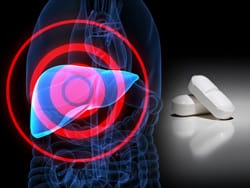
dt_190222_prescription_pills_liver_250x188.jpg


Only half of acute liver failure cases are from intentional overdoses of acetaminophen; the other half occur from chronic use or unintentional overdoses. This is very important, as there are substantial differences in the evaluation and prognosis of these patients. The Rumack-Matthew nomogram is used to estimate probable hepatic toxicity after a single ingestion; however, because its use is obsolete in chronic, ongoing therapeutic misadventures, the efficacy of N-acetylcysteine cannot be predicted using the same rules.


Long-term use of supratherapeutic amounts is more toxic and recognized later than a single ingestion; therefore, these patients have higher rates of severe hepatotoxicity, liver-related complications, and death, as compared to those who have attempted suicide with acetaminophen. Most patients with acetaminophen-induced acute liver injury present with undetectable levels of acetaminophen, and this is especially true for those with accidental overdoses.[7] Therefore, clinicians need to consider acetaminophen as an explanation for acute liver failure, even when the history and the blood level of acetaminophen are not supportive.


3. Alcohol ingestion has a surprising relationship with acetaminophen.

Contrary to what one might think about alcohol being a risk factor for hepatotoxicity, ingesting alcohol and acetaminophen together does not increase the risk for hepatotoxicity due to the acetaminophen. In fact, the rate of liver injury was found to be substantially lower (5.1% vs 15.2%) in those who had an acute acetaminophen overdose with alcohol ingestion compared with acetaminophen alone.[8] Alcohol, as a substrate of CYP2E1, may lower the risk for liver injury by competing with acetaminophen for the enzymes, thus decreasing the amount of the toxic metabolite produced. The role of chronic alcohol ingestion is controversial, especially when those with an alcohol use disorder stay within the therapeutic recommendations for acetaminophen. Still, most clinicians recommend a lower daily dose of acetaminophen for these patients, as repeated supratherapeutic doses of acetaminophen are well recognized to increase the risk for hepatotoxicity.[9]


Patients with advanced liver disease should also limit their acetaminophen intake.[8] Cirrhosis, regardless of the etiology, reduces the metabolism of acetaminophen.


Therefore, given the potential risk, patients with either an alcohol use disorder or underlying liver disease should be advised to limit their daily amount of acetaminophen to less than 2 g/day.


4. Risk for DILI from statins may be overestimated.

Clinicians may be hesitant to prescribe statins to patients with liver disease and thus miss an important opportunity to reduce cardiovascular risk. This is especially true in conditions like nonalcoholic fatty liver disease (NAFLD), where cardiovascular disease is the leading cause of mortality.


Mild to moderate transient asymptomatic elevations in serum aminotransferase levels are common with statins. This phenomenon occurs early after the initiation of therapy but eventually normalizes, despite ongoing therapy.[10] So, this is a lab abnormality and not a true liver injury; liver biopsy shows no histopathologic change.


According to the Drug-Induced Liver Injury Network (DILIN), only 3.4% of reported drug-induced liver injuries were linked to statins, confirming its rare occurrence.[11] Growing evidence also shows that statins may actually reduce the risk for liver cancer and improve outcomes in those diagnosed with hepatocellular carcinoma.[12] Although we do not recommend starting a statin to reduce the risk for liver cancer, clinicians should not be afraid to use this class of agents to reduce the risk for cardiovascular disease.
 
Part 2
5. All-natural does not mean risk-free.

The DILIN found that 15%-20% of DILI cases could be attributed to herbal and dietary supplements.[13] This number is likely to be substantially underestimated, as patients rarely reveal their use of herbal and dietary supplements, and few adverse reactions to herbal and dietary supplements are reported.[14]


According to the DILIN, most liver injury that is induced by herbal and dietary supplements is attributed to bodybuilding agents (eg, anabolic steroids), green tea extract, and multi-ingredient nutritional supplements, many of which also list green tea as a component. Others implicated include those for weight loss, depression, sexual performance, gastrointestinal upset, immune support, and joint support, as well as Chinese herbs.[15]


Perspective is important. Although herbal and dietary supplements may be commonly implicated in DILI, most people will not experience liver injury; it is uncommon despite their widespread use. A population-based survey in Iceland attributed 16% of DILI cases to herbal and dietary supplements, but this translated to an incidence of herbal and dietary supplement–related acute liver injury of just 3 per 100,000 persons.[16]


Clinicians must ask patients about their use of herbal and dietary supplements, recognizing that many patients are hesitant to discuss nontraditional alternatives.


One more thing...

The LiverTox website, a collaboration of the National Institute of Diabetes and Digestive and Kidney Diseases, the National Library of Medicine, and the DILIN, provides up-to-date information on DILI, including herbal and dietary supplements. This freely available resource is searchable, with abundant educational information and an option to submit case reports.


Follow Medscape on Facebook, Twitter, Instagram, and YouTube


References

  1. Chun LJ, Tong MJ, Busuttil RW, Hiatt JR. Acetaminophen hepatotoxicity and acute liver failure. J Clin Gastroenterol. 2009;43:342-349. Source
  2. Chang CY, Schiano TD. Review article: drug hepatotoxicity. Aliment Pharmacol Ther. 2007;25:1135-1151. Source
  3. Fung M, Thornton A, Mybeck K, Wu JH, Hornbuckle K, Muniz E. Evaluation of the characteristics of safety withdrawal of prescription drugs from worldwide pharmaceutical markets--1960 to 1999. Ther Innov Regul Sci. 2001;35:293-317. Source
  4. Reuben A. Hy's law. Hepatology. 2004;39:574-578. Source
  5. Chalasani N, Fontana RJ, Bonkovsky HL, et al; Drug Induced Liver Injury Network. Causes, clinical features, and outcomes from a prospective study of drug-induced liver injury in the United States. Gastroenterology. 2008;135:1924-1934. Source
  6. Bernal W, Wendon J. Acute liver failure. N Engl J Med. 2013;369:2525-2534. Source
  7. Leventhal TM, Gottfried M, Olson JC, Subramanian RM, Hameed B, Lee WM. Acetaminophen is undetectable in plasma from more than half of patients believed to have acute liver failure due to overdose. Clin Gastroenterol Hepatol. 2019 Feb 4. pii: S1542-3565(19)30087-4. Source
  8. Dart RC, Erdman AR, Olson KR, et al; American Association of Poison Control Centers. Acetaminophen poisoning: an evidence-based consensus guideline for out-of-hospital management. Clin Toxicol (Phila). 2006;44:1-18. Source
  9. Zimmerman HJ, Maddrey WC. Acetaminophen (paracetamol) hepatotoxicity with regular intake of alcohol: analysis of instances of therapeutic misadventure. Hepatology. 1995;22:767-773. Source
  10. Demyen M, Alkhalloufi K, Pyrsopoulos NT. Lipid-lowering agents and hepatotoxicity. Clin Liver Dis. 2013;17:699-714. Source
  11. Chalasani N, Bonkovsky HL, Fontana R, et al; United States Drug Induced Liver Injury Network. Features and outcomes of 899 patients with drug-induced liver injury: The DILIN Prospective Study. Gastroenterology. 2015;148:1340-52.e7 Source
  12. Thrift AP, Natarajan Y, Liu Y, El-Serag HB. Statin use after diagnosis of hepatocellular carcinoma is associated with decreased mortality. Clin Gastroenterol Hepatol. 2019 Jan 6. pii: S1542-3565(19)30019-9. Source
  13. Navarro VJ, Barnhart H, Bonkovsky HL, et al. Liver injury from herbals and dietary supplements in the U.S. Drug-Induced Liver Injury Network. Hepatology. 2014;60:1399-1408. Source
  14. Bunchorntavakul C, Reddy KR. Review article: herbal and dietary supplement hepatotoxicity. Aliment Pharmacol Ther. 2013;37:3-17. Source
  15. Navarro VJ, Khan I, Björnsson E, Seeff LB, Serrano J, Hoofnagle JH. Liver injury from herbal and dietary supplements. Hepatology. 2017;65:363-373. Source
  16. Björnsson E, Bergman OM, Björnsson HK, Kyaran RB, Olafsson S. Incidence, presentation, and outcomes in patients with drug-induced liver injury in the general population of Iceland. Gastroenterology. 2013;144:1419-1425. Source


Medscape Gastroenterology © 2019 WebMD, LLC

Any views expressed above are the author's own and do not necessarily reflect the views of WebMD or Medscape.


Cite this: Drug-Induced Liver Injury: 5 Things to Know - Medscape - Mar 07, 2019.
 
good article. got me wondering how much acetaminophen is too much.
https://www.health.harvard.edu/pain/acetaminophen-safety-be-cautious-but-not-afraid
says you can take 4gr safely daily. that seem crazy.

couldnt find anything as scientific as harvard.edu but it seems the consensus for ibuprofen is 3200mg

naproxin around 1000mg

Acetaminophen is 4 gr a day, but the FDA is pushing to have the upper level go down to 3gr a day. It's been in the works for years though. The problem with the NSAID's is long term use as they are kidney killers.
 
Effect of ibuprofen and acetaminophen on postexercise muscle protein synthesis

There is ambivalence out there in studies but worth researching for yourself but--
In conclusion, the increased rate of muscle protein synthesis normally seen 24 h after high-intensity eccentric resistance exercise was attenuated[modified] by consumption of ibuprofen and acetaminophen at over-the-counter levels. The long-term influence of this acute response after resistance exercise for individuals who chronically consume these (or similar) drugs cannot be determined from this study. However, long-term use of these drugs may inhibit the normal hypertrophic response to resistance training.

https://www.physiology.org/doi/full/10.1152/ajpendo.00352.2001
 
ya, some one was saying that nsaids inhibit the inflammation needED to stimulate growth.
but what is the safe daily limit of nsaids?
 
Last edited:
ya, some one was saying that nsaids inhibit the inflammation need to stimulate growth.
but what is the safe daily limit of nsaids?

I will find you a list but it depends on the particular med and for that matter what field of medicine is responding. Voltaren/diclofenac is the worse of the top of my head and always seems to be close to being yanked from the market. All of them are no-nos if your renal function is impaired. Also no-no's for cardiovascular reasons.
 
Top